
Imbalanced muscle groups can really hold back how well your body moves and feels. I’ve seen how this issue can affect day to day activities. Even simple movements like walking, reaching, or squatting start to feel awkward or uncomfortable when certain muscles are much stronger or tighter than others. In this article, I want to make sense of why muscle imbalances happen, how they can restrict everyday movement, and what you can do to spot and address these problems.
What Muscle Imbalances Really Mean
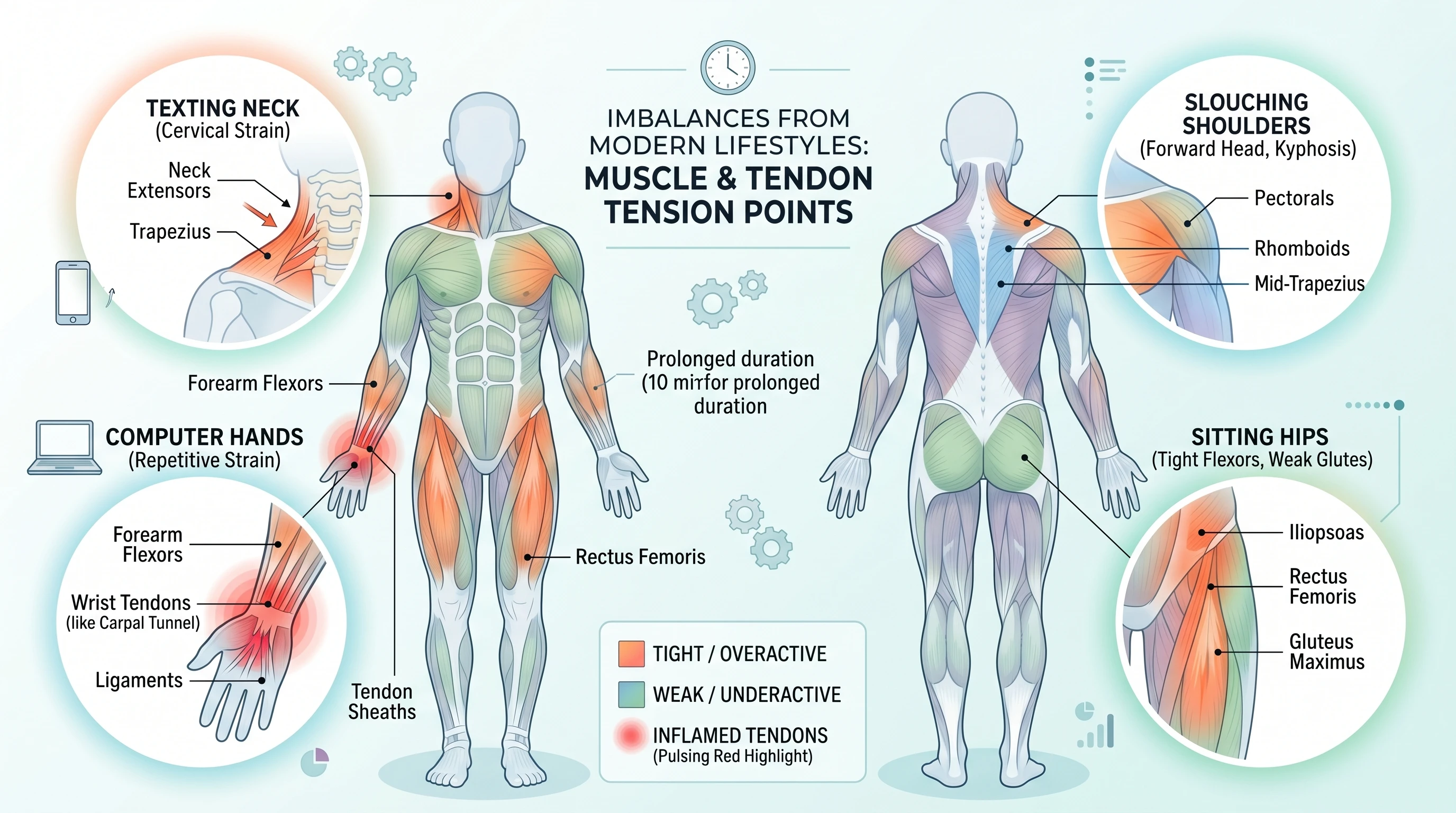
A muscle imbalance occurs when opposing muscle groups, like the quadriceps and hamstrings in your legs or the chest and upper back, do not have equal strength or flexibility. I often notice that people develop these imbalances gradually, usually because of how they move, sit, or train. Modern life adds to the problem with long sitting hours, repetitive tasks, and a lack of varied movements. As a result, one set of muscles can grow short and tight while others stay weak or overstretched.
For example, working at a desk all day encourages tight hip flexor muscles and weak glutes. Or, focusing your workout on bench presses while ignoring rows can lead to tight chest muscles and underdeveloped upper back muscles.
Current research supports the idea that muscle imbalances can lead to joint pain, bad posture, and restricted range of motion. According to the American Council on Exercise, these imbalances not only raise the risk of injury but also make normal movement feel stiff or uncomfortable (ACE Fitness).
How Imbalanced Muscle Groups Affect Movement
When muscle groups are out of balance, the body tries to compensate. This usually leads to awkward movement patterns or using the wrong muscles for certain actions. Over time, this compensation can stress your joints and create a ripple effect throughout your body. I’ve seen this not just in people who exercise but also in those with mostly sedentary routines.
- Posture Problems: Tight chest muscles and weak upper back muscles pull your shoulders forward and round your upper back, affecting sitting and standing positions.
- Limited Range of Motion: Imbalances in the hips or shoulders can limit how far you can move your legs and arms; this makes it tougher to reach overhead, squat, or rotate your waist.
- Chronic Pain: One sided strength or tightness makes certain joints work harder, often causing pain in the knees, lower back, or neck.
- Movement Compensation: Instead of moving smoothly, your body creates new ways to get the job done, which isn’t very efficient and can build even worse habits with time.
It’s vital to recognize that these compensations, if left unchecked, can lead to more serious injuries in the future. The longer you go without addressing them, the deeper these habits become rooted, making it harder to fix the problem down the road.
Why Muscle Imbalances Develop
Muscle imbalances rarely happen overnight. I’ve found that simple, repeated habits are usually the cause. A few common contributors include:
- Sitting for Long Hours: This reduces the activity of the glutes and stretches the hamstrings, while the hip flexors become short and tight. Sitting for extended periods daily reinforces these patterns and can cause discomfort when standing or walking.
- Repetitive Motions: Jobs or sports that ask the same muscles to work over and over, like always carrying a bag on one shoulder or swinging a racket, make those muscles overactive and can throw off balance on both sides.
- Training One Area More: Focusing workouts on visible muscles, such as biceps or chest, while ignoring others creates unevenness. Many gym goers love arm or chest days, but skipping back or leg exercises fuels these issues.
- Past Injuries: Hurting a muscle or joint can cause nearby muscles to overcompensate, leading to longterm imbalance. Even after recovery, some muscles might stay weaker while others take on excess load.
Research in physical therapy circles notes that individuals recovering from injury often show altered movement patterns even after the tissue has healed (NCBI). This creates a lasting chain reaction if not fixed, and small misalignments may persist unless you target them specifically.
Spotting Imbalanced Muscle Groups Early
Finding imbalances before they cause pain or injury saves a ton of trouble later. Here are signs I look out for:
- Obvious postural changes such as slumped shoulders or uneven hips.
- One sided soreness after certain activities, especially when your form was good. If one side feels more tired or strained after basic movements, that’s a red flag.
- Difficulty with symmetrical movements such as squats or pushups; one side pushes harder, or one knee moves differently than the other.
- Frequent muscle strains or tightness in a particular area, with one muscle always feeling tender or stiff.
You don’t need fancy tools to start checking for imbalances. Simple movements like standing on one leg or reaching overhead can show where things are off balance. If you notice pain or big differences between sides, that’s a good clue that something is up. Video recordings of your movements—like recording a squat to check knee tracking—can really help spot issues, too.
A Simple Guide to Restoring Balance and Improving Movement
Improving muscle balance isn’t about doing more of everything but about targeting the right weak or tight spots. Here’s the approach I generally recommend:
- Assess Regular Movements: Pay attention to how you move while walking, picking things up, or sitting. Watch if one side works harder or your posture is off.
- Stretch Tight Areas: Regularly stretch muscles that feel short or stiff. Common problem areas include the chest, hip flexors, and calves.
- Strengthen Weaker Muscles: Target muscles that often get ignored, like the upper back, glutes, or deep abdominal muscles. Focused strength training helps bring weak spots up to par.
- Balance Workouts: For every push movement (like a pushup), include a pull movement (like a row) to keep things even. Adding variety encourages balanced muscle use.
- Warm Up Properly: A solid warmup encourages all muscles in a group to work evenly by activating both sides of the body. Try dynamic stretching and gentle mobility drills before workouts, and don’t skip cooldowns.
Following this method helps your whole body move better and cuts the risk of injury from lopsided strength. Practicing good movement and checking in often pays off over time.
Things to Think About When Working on Muscle Imbalances
Real change happens when you pay attention to several key areas. I’m sharing some practical tips and some challenges to watch out for:
- Patience and Consistency: Fixing imbalances takes time and steady effort; don’t expect overnight transformations as slow progress is normal.
- Listen to Your Body: If stretching or strengthening an area causes pain, dial it back and look for ways to ease in slowly. Start gentle and gradually increase effort as comfort improves.
- Watch for Compensation: While correcting one imbalance, avoid creating another by overworking new areas.
Why Patience Pays Off
Muscle and joint changes don’t happen overnight. I keep track of progress by writing down what exercises and stretches I do each week. Even small improvements, like a deeper squat or easier reach overhead, can show you’re making progress. Checking photos or videos every few weeks can help spot subtle changes.
Balancing Strength with Mobility
Strengthening weak muscles is helpful but only if they’re able to move freely. Combining static stretching, yoga, and mobility drills with strength training stops tightness from limiting your progress. Try adding gentle foam rolling or stretching between strengthening exercises to keep muscles moving freely.
When to See a Professional
Sometimes, imbalances don’t improve with home exercises alone. If pain sticks around or movement gets worse, it’s a good idea to talk to a physical therapist. These pros use hands on assessments and targeted programs to help restore normal patterns safely. They can help you build a plan tailored specifically for your imbalances and goals.
Advice for Staying on Track
Maintaining muscle balance is part of a healthy lifestyle. Here’s what I do regularly to keep things in check:
- Switch up exercise routines regularly so no one muscle group gets all the attention; adding different types of workouts can help, too.
- Take stretch breaks when sitting for a long time, especially after work or during long drives. Short walks or standing every hour help, too.
- Incorporate bodyweight movements, like planks and lunges, focusing on evenness and control—pay attention to balance and good posture.
Simple changes like walking instead of driving short distances help keep hip and leg muscles working evenly. If I notice tightness on one side, I add extra stretching or rolling into my daily habits. Consistency keeps muscle balance from slipping away again.
Frequently Asked Questions
These are some frequent questions I hear about muscle imbalances and restricted movement:
Question: How do I know which muscles are imbalanced?
Answer: Watch for recurring soreness on one side, differences in strength or flexibility from side to side, or pain during certain movements. Trying basic movements like squats or arm raises can also show differences between sides; sometimes, one side feels easier or moves more smoothly than the other.
Question: Can I fix muscle imbalances by myself?
Answer: For minor issues caused by daily habits, simple stretching and strengthening can work well. More serious or persistent problems are best addressed with guidance from a pro, like a physiotherapist who can spot patterns and give feedback.
Question: How long does it take to fix a muscle imbalance?
Answer: This varies depending on how severe the imbalance is and how consistently you work at it. Small improvements can show in a few weeks, while deeper imbalances may take several months. Keep at it with patience and track your progress along the way.
Why Addressing Muscle Imbalances Matters
Taking steps to keep muscles balanced can really affect how you move and feel every day. I’ve learned that even basic stretches, purposeful strength training, and mindful movement make a big difference in managing pain and feeling more mobile. Tackling issues early on is a simple way to stay active and steer clear of longterm aches or injuries.
Paying attention to how your body moves and making little changes helps you move with less restriction and live more comfortably. Staying proactive about muscle health gets easier as you develop better body awareness, and these good habits help support longterm mobility and well being.